
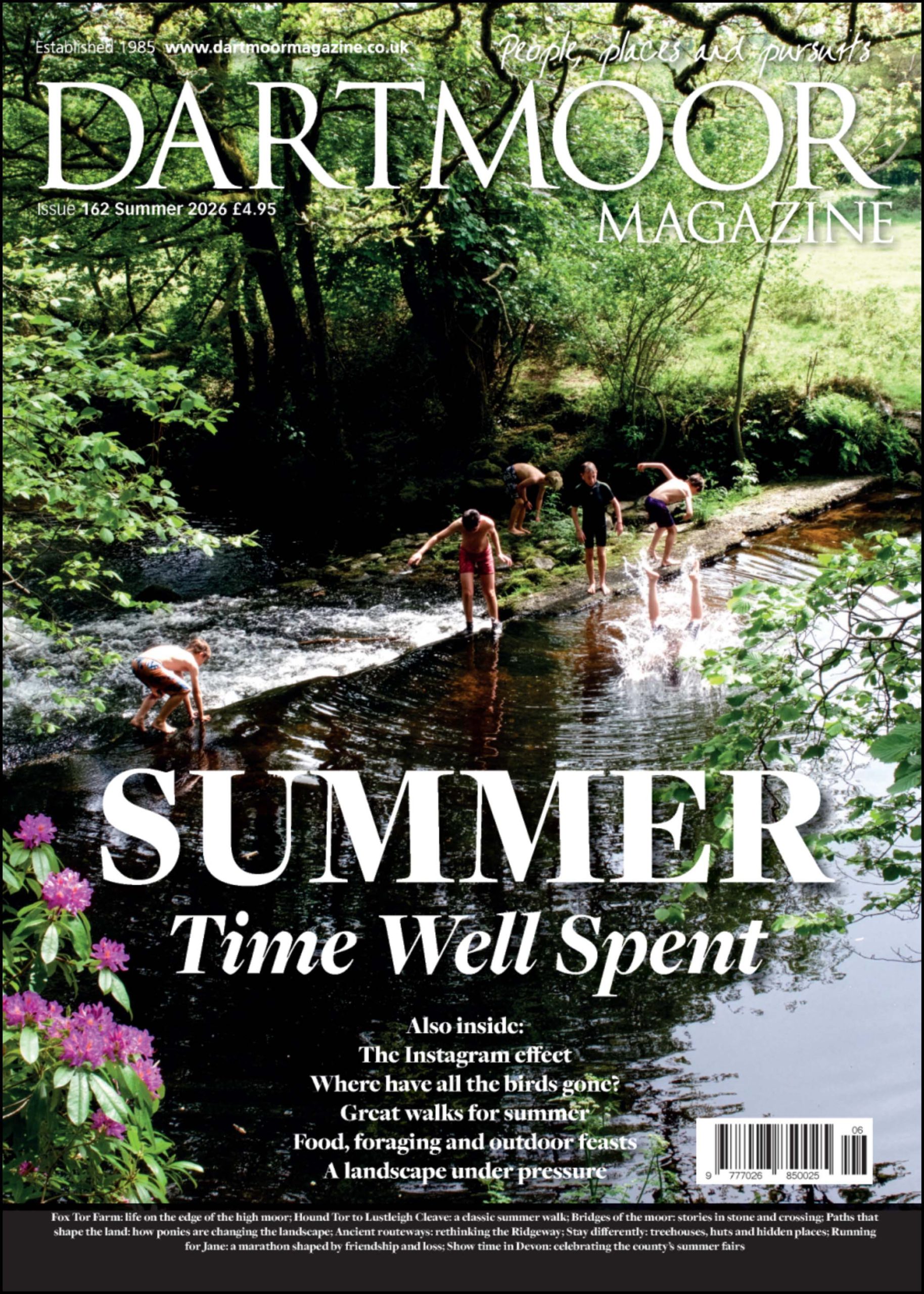

‘Dartmoor 365’: is a book written by John Hayward (1991) that divides Dartmoor National Park into 365 square miles and every page details one of these squares with information about what may be found there. The book continues to be updated and published by Rob Hayward (son of John).
CLICK HERE to visit the Official Dartmoor 365 website.
Facebook: Dartmoor 365 Group: A HUGE Facebook group, set up and run by Anthony Francis-Jones, where Dartmoor Explorers share photos, stories and information about their Dartmoor 365 adventures. It’s a really friendly Facebook group, very well run by AFJ, and they usually gather every summer at Two Bridges for a cream tea and walk. The rule is: ‘Always type the square(s) visited at the beginning of every Post’.
On Dartefacts we call ‘Dartmoor 365’: D365
- D365 Tick-List (in code order)
- D365 Tick-List (in alphabetical order)
- D365 “Dartefacting” Tick-List (in alphabetical order): provides ‘Bulk-Ticking’ for Logged in Subscribers)
- Top D365 Squares: The most visited ‘D365’ Squares (according to website data).
- Top D365 Square Tickers: Subscribers listed in order of the number of D365 Squares they have ‘ticked-off’.
- CLICK HERE to Subscribe to Dartefacts and start ‘ticking off’ visited Squares!
Purpose:
The Dartefacts Dartmoor 365 map geographically locates the squares and main named Dartefact for each of the ‘365’ pages of John Hayward’s book ‘Dartmoor 365’ (1991).
Clicking on either a mapicon or anywhere inside a grid square on the main ‘D365 Page’ (or just on a D365 mapicon on the other map pages) provides a pop-up hyperlink label. This label identifies each individual D365 Square and the relevant Dartefact it contains. Clicking on the hyperlink will display that D365 Square with the Dartefacts within that Square and the 8 other Squares surrounding it. A magenta selection square makes it clear which D365 Square is selected.
Some squares, especially around the edges of the National Park Boundary are entirely on private land and in that instance access must be sought from the landowner before visiting. Do not assume that a listed item is legally accessible. No responsibility for trespass, injury or damage to property etc. can be attributed to this project.
Further Information:
- Subscribers benefit from being able to zoom in to see the full 1:25k OS map details (Subscribe here).
- DarteTabs: You can also scroll through the list of ‘DarteTabs’ below the map to find and select the D365 square/ item you want to view.
- “Jaunting”: On Dartefacts we also use the Squares as an easy way to navigate and ‘jump’ around the map.
- 368: In total there are actually 368 Squares to visit! The original 365 Squares, plus K21 Parke (the Bonus “Leap Year” Square) and two other Bonus Squares; B18 (Crockernwell) and P1 (Double Waters).
- The Book: This website does not provide the actual content of the individual pages which are of a published and therefore copyright work. You are very much encouraged to purchase the book to properly locate all the additional items listed on each page.
- Book Page Numbers: Since the original publication of the book in 1991, two more editions have been published by Rob Hayward (son of John Hayward). The page numbers in these newer editions differ slightly from the original book but Dartefacts continues to reference the page numbers from the original (this will be updated soon).
- NGRs (National Grid References): Dartefacts uses ten-figure NGRs (ie. SX 12345 12345) whereas the book uses less accurate six-figure (ie. SX 123 123). Dartefacts may therefore have some slightly different NGRs (only visible to Subscribers to the Dartefacts website) to the book.
- ‘Fudging’: Some of the items chosen by John Hayward were never actually within the Squares they represent! An incorrectly located ‘Square item’ that represents an area (rather than an item at a specific point), may be ‘moved’ to its correct Square (resulting in a different NGR to the book).
Acknowledgements:
John Hayward and son Rob Hayward: The indication by this website that a Dartefact is also a ‘Dartmoor 365’ item is to assist the book user. To ‘play the game properly’ you will still need to know what other items are listed on each page of the book. The Dartefacts website does not publish this copyright information. You are very much encouraged to purchase this book as the further information and beautiful drawings make this one of the best and most popular Dartmoor guide books.
Simon Battersby Consulting Ltd integrated ‘Dartmoor 365′ into Dartefacts and developed the use of .gpx/ kml files and interactivity within Ordnance Survey (OS) Open Layers Maps for Dartefacts (which is used by D365 and many other Dartefacts’ Classifications). If you need a website I can thoroughly recommend Simon.
Peter Kearney created the GPX D365 grid lines and the individual selected D365 Squares within this classification and integrated them into the Dartefacts’ Database and OS Open Layers Map displays.